Quale capacità deve avere l'accumulo domestico? Tre passi per dimensionare il tuo impianto
If the distribution is too large, the extra money spent will not be recovered in ten years; if the distribution is small, you still have to buy the electricity you should buy at night. There is only one truly reliable algorithm: look at how much your home actually used in the past year.
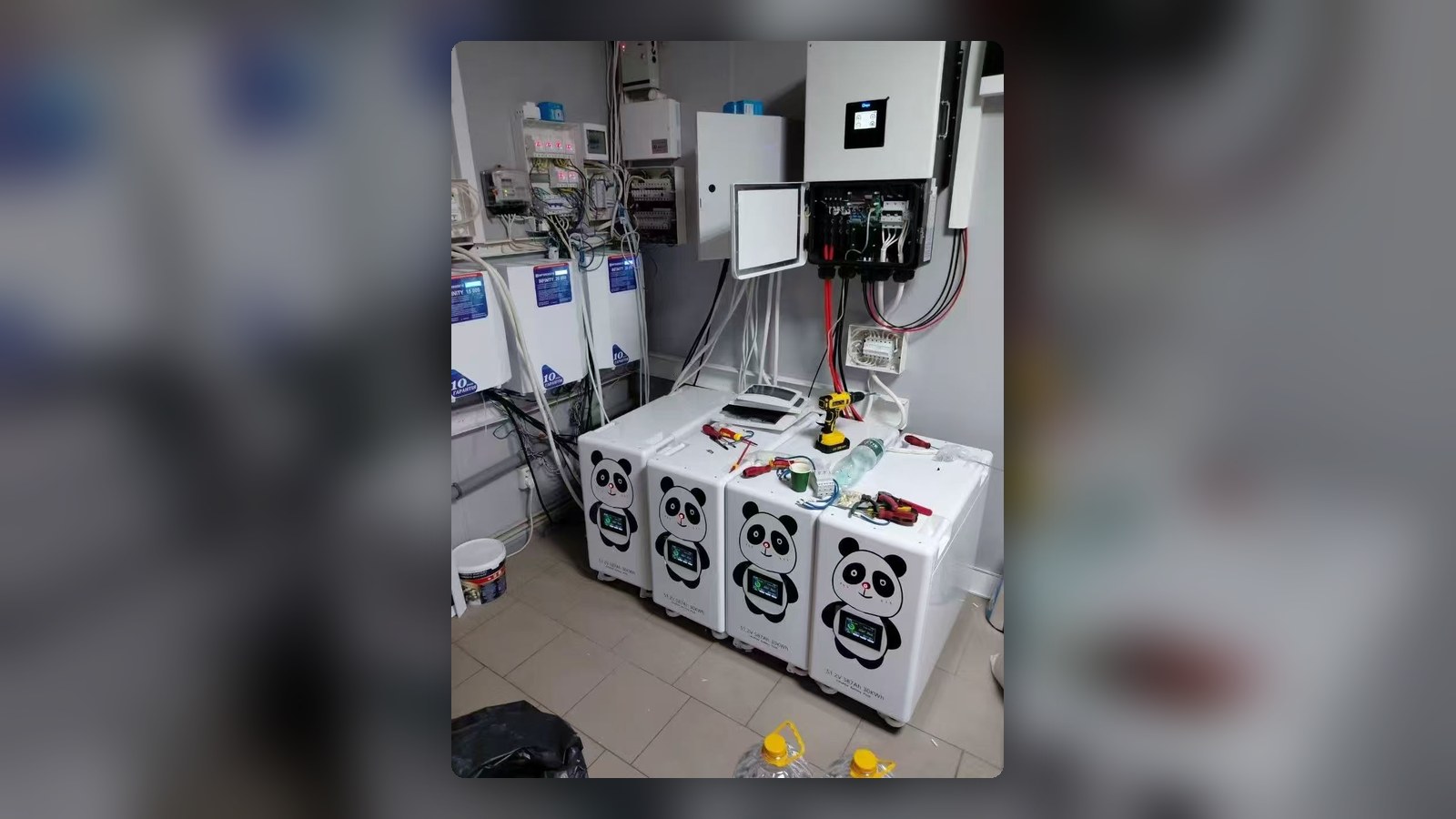
Most of the selection suggestions circulated on the Internet are based on experience values such as "10 kilowatt hours of electricity for a family of three". This kind of figure can be used as a reference, but it is very problematic to actually place an order based on it - for the same family of three, if the south uses air conditioning in summer and the north uses electricity for heating in winter, the difference in electricity consumption can be three times.
The following method only uses the data you have on hand and can be completed in ten minutes.
Step 1: Figure out how much electricity you want to cover
Take out the electricity bills for the past 12 months (or export the electricity consumption details in the electricity app) and do two things:
- Put 12 monthsMonthly electricity consumptionAdd up and divide by 365 to getAverage daily electricity consumption
- find out among themOutside photovoltaic power generation hours during the dayThe electricity consumption part - that is, the period from evening to next morning
If you can't get time-sharing data, use a simplified approach:Electricity consumption at night is about 55%–65% of the total daily average electricity consumption(No one is home in most households during the day, but air conditioners and refrigerators operate 24 hours a day).
For example: 6,000 kilowatt-hours of electricity are used in a year, the daily average is 16.4 kilowatt-hours, and 60% is taken at night, which is about 9.9 degrees. This is the amount you want the energy storage to cover.
Step 2: Leave a margin and infer the battery capacity
The battery cannot discharge electricity completely. Lithium iron phosphate usually leaves a 10% protection margin, that is, the available capacity is 90% of the nominal. At the same time, the system itself has losses (inverter, lines), and the overall efficiency is about 88%.
Required battery capacity = Power consumption to be covered ÷ 0.9 ÷ 0.88 ≈ Power consumption to be covered × 1.26
Following the above example:9.9 × 1.26 ≈ 12.5 度. Move up to the standard gear and match 15kWh It is more appropriate to leave a little margin for winter or the purchase of electrical appliances in the future.
Step 3: Adjust according to special circumstances
Three common situations require additional capacity:
- There are charging stations——Household pile is 7kW, charging for 3 hours a night is 21 degrees Celsius. Whether to use energy storage with charging piles is an independent economic account. It is usually recommended to measure it separately and not incorporate it into energy storage.
- Need backup power——If the goal is to protect the home's power supply during a power outage, calculate it based on "critical load power × expected backup time" instead of saving electricity costs. The optimal capacity of the two goals is usually different.
- Large photovoltaic installed capacity——Photovoltaic power generation far exceeds self-use, and the price of surplus electricity is low. Energy storage can be appropriately increased to save more surplus electricity.
Comparison table: How to match different families
| family situation | Average daily electricity consumption | Recommended energy storage capacity | Notes |
|---|---|---|---|
| Small apartment / two persons | 8 – 12 degrees | 5 – 8 kWh | Mainly covers basic electricity consumption at night |
| Family of three (no piles) | 15 – 22 degrees | 10 kWh | The most common configuration, the most cost-effective |
| Independent building (including charging pile) | 25 – 35 degrees | 15 kWh | It is recommended that the pile be in a separate circuit |
| Large house / multiple air conditioners | 35 – 50 degrees | 20 kWh | Often used with three-phase electricity |
| Mainly backup power | Depends on load | Press power × duration | Different from the algorithm for saving electricity bills |
Two easy pitfalls
Pitfall 1: Equip the size for “possible use in the future”
The cost of energy storage batteries is basically proportional to the capacity. An extra 5kWh will cost several thousand dollars more. If this part of the capacity is not used for a long time, it will be wasted. Most current home energy storage supportsmodular stacking, you can add battery packs directly if you want to add them later, there is no need to buy them all at the beginning.
Pitfall 2: Only look at capacity, not power
Capacity determines "how much can be stored", and power determines "whether it can be driven at the same time." If you have high-power equipment such as instant water heaters and central air conditioners at home, you must confirm the energy storage system.Continuous output powerEnough or not. No matter how large the capacity is, it will still not be able to carry it if the power is not enough.
If you're not sure, just send us the data.
Tell us your home's average daily electricity consumption, whether it has photovoltaics, whether it has charging piles, and its main high-power appliances. We will directly give you a capacity recommendation and reasons, as well as a comparison of the benefits of different capacity solutions. No need to guess, no need to be led around by sales.